






What Are Spiritual Bodies?
The Eternal Body
Once a soul transcends its material bodies (causal, subtle astral, gross physical), it’s said that it can reside in the spiritual universe (eternal abode) using an immortal, spiritual form (Bhagavad Gita, 15:6-16). All liberated souls – whether liberated through sadhana or having always been liberated – can have spiritual bodies that are characterized by sat (eternity), chit (full knowledge/consciousness), and ananda (bliss). These bodies are said to be made of Source’s superior, spiritual energy (para prakriti and yogmaya). Ergo, they’re never subject to the limitations of the three material gunas.
The spiritual form is thought to be an individualized, eternal spiritual body that’s perfectly suited for engaging in a loving, personal relationship with Source in the spiritual universe. This includes divine pastimes (leelas) (Bhagavad Gita: 4:8, 8:16). Leelas are considered a manifestation of Source’s divine grace, joy, and power. Remember all of the fables, parables, ancient folklore, and Greek mythology we learned as children? Like those stories, leelas can offer profound lessons and insights into the nature of our existence. For example, the childhood stories of Sri Krishna (stealing butter, dancing with the gopis) are considered madhurya leelas (pastimes of sweetness).
Bhagavad Gita as a Leela
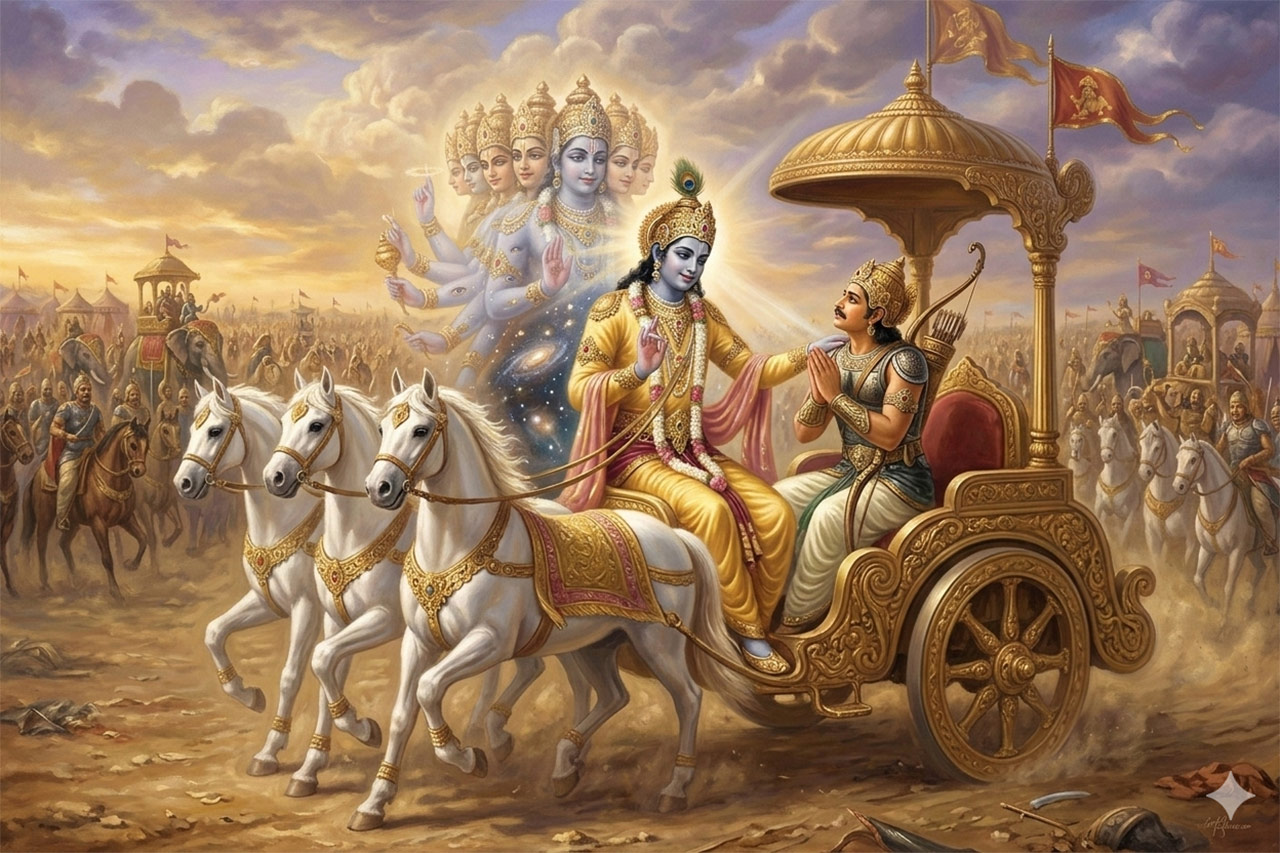
Our research suggests that the Bhagavad Gita, in a broader sense, could be considered a jnana-leela (the pastime of wisdom). But is it actually a mixture of multiple types of leelas? For example, when Sri Krishna takes the role of a charioteer for his friend/devotee Arjun on the battlefield of Kurukshetra, this could be considered an example of a bhakta-vatsala leela — where Source shows love and kindness to a devotee. By driving the chariot, perhaps Sri Krishna is demonstrating that Source is intimately involved in the vehicle of our physical lives, guiding us through the chaos of conflict.
Arjun’s sudden collapse into doubt and grief over having to fight his cousins in battle could be seen as a divine clouding. Perhaps Sri Krishna allows Arjun to experience this intense catalyst (confusion and despair) so that the subsequent teachings of the Bhagavad Gita can be delivered for the benefit of all humanity. In this sense, Arjun’s crisis is an intentional part of the Bhagavad Gita to set the stage for universal wisdom.
The battlefield of Kurukshetra is often described as a dharma-yuddha leela. Dharma-yuddha refers to righteous warfare that occurs while following several rules that make the war fair. Look at it this way fellow souls. The Bhagavad Gita could be considered a cosmic drama where the forces of order and chaos meet. Sri Krishna would be the director who remains untouched by the drama while being at the very center of it. This reflects the concept of selfless action (Bhagavad Gita, 2:47) — acting in the world as if it were a play, without being bound by its outcomes.
With all of these wonderful lessons, it no surprise that the Bhagavad Gita is one of the resources that resonates with us the most.