


What Are Energy Centers (Chakras)?
June 20, 2026 | Updated October 5, 2026 | By Soul on a Journey | 13 Min Read

Energy Centers Defined
What Does Chakra Mean?
We hear the term chakra a lot, but what exactly does the word chakra mean? Based on our research, chakra means wheel or circle. It’s derived from the Sanskrit root word cakra, which literally means wheel. While not yet scientifically proven, beliefs about chakras date back to at least 1,500 years ago. Are these what the Bhagavad Gita (8:9-12) elude to when mentioning the life-airs between the eyebrows and gates of the body?
Some even suggest that chakra science originated from tantra. Tantra is often misunderstood as sexuality. While tantra does address sexuality, it’s not defined merely by sexuality. We think of it as a system for energy liberation and consciousness expansion. But we digress…
While there isn’t a consensus on the classification or number of chakras in Hinduism, Buddhism, or Yogic teachings, the total number ranges between 109 and 114. Sadhguru (Guru, Yogi & Mystic) explains that there are seven primary chakras and 114 chakras total — with at least two chakras located outside of the body. There does seem to be a consensus that the seven fundamental chakras are the root, sacral, solar plexus, heart, throat, third eye, and crown chakras.
Energy Centers Illustrated
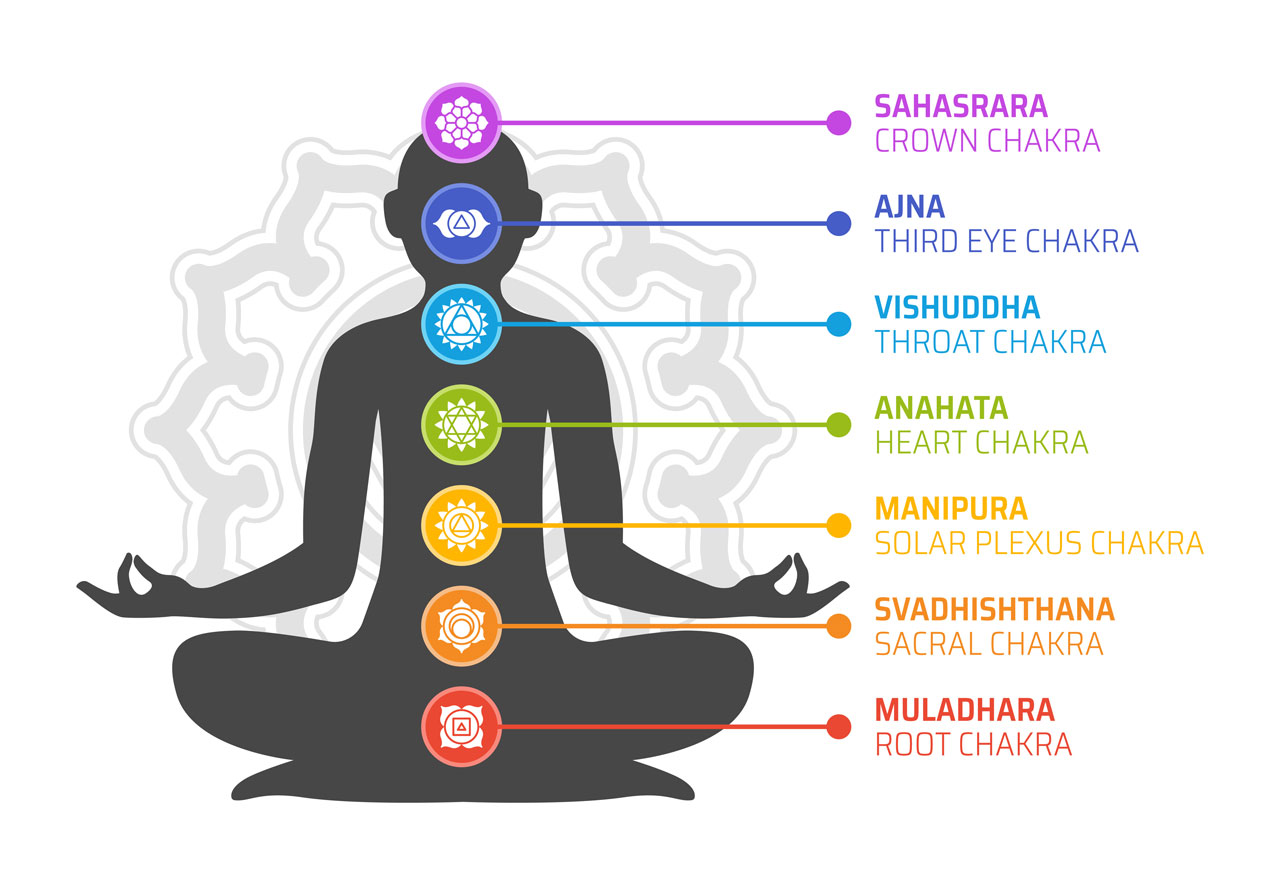
What Are Chakras vs Energy Centers?
We understand that there are different terms for the whirling vortexes that process our subtle vital energy. For our purposes, we will use the phrases spiritual energy centers or just energy centers when referring to chakras. So what are energy centers? Energy centers are considered energy processing hubs, perhaps best described as the mechanisms that translate various types of energy into health and vitality in our material bodies.
Essentially, energy centers function as vortices and two-way transformers that regulate the energy exchange between our material bodies. We think of them as mechanisms that receive, transform, and distribute vital energies. Energy centers are said to reside in the subtle astral body, meaning they can’t be detected via mainstream scientific means like X-rays. Yes, their location does make it more difficult for us to comprehend, but that doesn’t negate their validity.
Christina Lopes (DPT, MPH & Heart Alchemist) explains that energy centers can also act like computer chips to encode information (trauma, gifts, etc.) from various lifetimes. This is synonymous with Dr Joe Dispenza’s (Author, Researcher & Lecturer) viewpoint that each energy center has its own unique energy or frequency that carries a corresponding level of consciousness and intent that expresses information.
Energy centers are considered energy processing hubs in the subtle astral body. They function as vortices and two-way transformers that regulate the energy exchange between our material bodies.
What Do Energy Centers Do?
Energy Centers as Processing Hubs
Energy centers are said to receive, transform, process, and distribute various types of vital energies — including sexual energy, kundalini energy, and life force energy or prana (Law of One: 63:6, 73:8) — based on a variety of personality and archetypical influences. As Dr Joe Dispenza explains, each of our energy centers can be thought of as mini brains. These mini brains receive coherent signals that influence our cells, tissues, hormones, and organs.
The correlation between energy centers and gross physical bodies is also corroborated by Edgar Cayce Readings (281-29). They explain that each energy center corresponds to particular parts of the gross physical body and particular functions within the gross physical body which are controlled by the nervous and endocrine systems.
What’s more, food, liquids, and breath are directly associated with our energy centers because digestion, metabolism, and assimilation is viewed in Yogic teachings as the way life force energy is extracted from the gross elements.
Life Force Energy Extraction
Based on Yogic teachings, we need a daily intake of the 5 gross elements (pancha bhutas) to sustain our gross physical bodies. Essentially, we use the elements as fuel, releasing the life force energy stored inside. What’s interesting fellow souls is that apparently we can extract life force energy through both indirect and direct means. For example, indirect extraction means would be considered from air (breathing), water (drinking), and food (eating). While direct extraction means would be considered straight from the ether (zero point field).
Let’s expand on the direct means. As explained by Autobiography of a Yogi (26:207-215), advanced yogis and spiritual masters have been known to use shortcut techniques like pranayama and kriya yoga to directly draw in life force energy from the ether without the need for a physical carrier like food. Giri Bala (1868 – unknown) was said to have done this for decades (Autobiography of a Yogi, 46:390-399). Its said that direct extraction takes way more willpower while indirect extraction, like digesting food, is more of an automatic, subconscious process. But we digress…
After life force energy is extracted, it’s said to flow to and vitalize the energy centers. And, if it couldn’t get any more interesting, life force energy will actually carry different vibrational qualities based on the food we ate, liquids we drank, and air we breathed in. These qualities are said to relate to the three gunas of material nature (Bhagavad Gita: 17:8-9). The three gunas or qualities of material nature are sattvic (fresh, pure), rajasic (spicy, stimulating), and tamasic (stale, heavy, processed).
Think about that for a second fellow souls. Every time we consume food, liquids, or air, their qualities are extracted and transformed, either harmonizing, over-stimulating, or depressing our energy centers. Mind. blown. What happens when we stop extracting life force energy? The body returns to being simple matter (apara prakriti).
Energy centers process and distribute various types of vital energies to sustain our material bodies.
How Do Energy Centers Move?
Energy Centers as Whirling Vortexes
Energy centers are thought to be whirling vortexes located on a straight line along the spine. Each energy center is said to emit a specific vibrational frequency, per Laura Berman, Ph.D (Educator & Therapist). Is this why energy centers are associated with colors, which also have vibrational frequencies? Colors can be perceived by us and their electromagnetic waves can be measured in nanometers. For example, violet has the highest frequency and shortest wavelength, while red has the lowest frequency and longest wavelength. But we digress…
Energy centers are also said to have different states: open, closed, overactive, and underactive. Does this mean that an underactive energy center could kick another energy center into overdrive, pulling extra energy away from that part of the body?
How do energy centers spin and why? This is definitely an intriguing question, and here’s what we’ve gathered so far. Some of our resources suggest that energy centers spin clockwise to release various energies out into our energy fields, and counterclockwise to pull various energies in from the environment. In Vedic teachings, life force energy directions are referred to as prana vayus. Vayu means wind or direction of energy. According to Dr. Ram Jain, PhD (Yoga), the five major vayus serve as directional currents that regulate a specific area of our bodily functions.
- Udana governs respiratory functions above the heart, moving energy upwards.
- Prana governs respiratory functions in the heart region, circulating energy throughout.
- Samana governs digestion, metabolism, and assimilation — metabolizing food, turning it into usable energy, and moving the energy inward.
- Apana governs the pelvic region and elimination functions, moving energy downward.
- Vyana governs circulation and the nervous system, moving energy outward through energy channels referred to as nadis or meridians.
How is the Heart Energy Center Unique?
The Law of One (51:7-8, 73:17) explains that each energy center has a variable speed of rotation or activity — with centers eventually forming stable, crystalline structures in more spiritually developed entities. For example, the lower energy centers are said to function through single-vortex foundational operations — each acting like a localized, rotational hub. In contrast with the lower energy centers, the throat energy center (blue ray) is said to act as a transmitter while the third eye energy center (indigo ray) is said to act as a gateway to pure consciousness.
How is the heart energy center (green ray) different? The heart energy center is associated with love, compassion, and the positive or service to others (STO) polarity. It’s not considered a foundation point, transmitter, or gateway but more like a bridge or springboard. While lower energy centers operate as single-vortex intake/outflow points that anchor us to gross physical bodies, perhaps the heart energy center’s double-spiraling nature functions as a bridge that transforms single-vortex material energy into double spiraling spiritual energy. Let’s elaborate on this.
What if the heart energy center’s first spiral draws together the lower ascending material energies and the higher descending spiritual energies into a unified central vortex using prana vayus? What if the second spiral projects this unified frequency outward across our physical extremities (Law of One, 73:17), also using prana vayus? Meaning, the heart energy center’s double spiral would leverage prana vayus to weave all of these different energies throughout our energy system. And, in doing so, it would create a dynamic bridge between lower energy centers (physical space/time) and higher energy centers (metaphysical time/space) while also anchoring us to material existence.
Do we need to activate the heart energy center to reach higher levels of consciousness? Based on our understanding of the Law of One (47:3-4), we do not need to activate the heart energy center in order to integrate with the third eye energy center. If we resonate with the negative or service to self (STS) polarity, we can bypass the heart energy center completely by using only the lower energy centers. But this approach is said to take a lot of discipline, single-pointed focus, self-control, and willpower. Has it been done before? It’s said that Rasputin and Genghis Khan were able to access higher consciousness levels this way (Law of One: 11:8-15).
VECTOR
DIRECTION
ENERGIES
PURPOSE
In-Pouring
Downward (Crown → Root)
- Pure Consciousness
(Divine Light, Intelligent Infinity, Grace) - Spiritual Energy (Para Prakriti)
Sustenance: Providing the light of consciousness and divine spark in every atom
Up-Pouring
Upward (Root → Crown)
- Kundalini Energy (Spiritual Energy, Harmonized Feminine and Masculine Polarities)
- Life Force Energy (Prana, Unharmonized Feminine and Masculine Polarities)
- Material Energy (Apara Prakriti, Universal Light, Gross Elements)
Evolution: Refining matter into spirit; the striving and will of the seeker to return to Source
What Are Energy Channels (Nadis)?
Nadis as Pathways
What are nadis? Based on our research, nadi means tube or channel in Sanskrit. Essentially, energy flows through our subtle energy systems using nadis, similar to how blood flows through our circulatory system using arteries and veins, or signals flow through our nervous system using nerves. Some of our resources even suggest that nadis follow the same pathways as our nerves and blood vessels. Nadis are said to weave through our subtle energy systems, crisscrossing and intertwining along the spinal column and intersecting with the lower six energy centers (Law of One: 49:5, 54:30-31). Is it this crisscrossing which actually creates the energy centers?
Nadis and energy centers are considered interconnected. Energy centers are like energy processing hubs and nadis are like pathways. We think of the entire system like this. Nadis serve as wires while prana vayus act as specialized currents, and energy centers function as the control hubs regulating energy flow. Together, they create a complex network of energy flow in the subtle astral body.
There isn’t a consensus on the number of nadis or energy channels. There are between 72,000 and 350,000 nadis per Yogic teachings and 12 meridians per Traditional Chinese Medicine (TCM). According to Yogic teachings, there are three main nadis or basic channels in the prana system: ida, pingala, and sushumna. Could these channels be synonymous with the three pillars of the tree of life (severity, mercy, middle) in Kabbalah? The ida and pingala are often portrayed as serpents, representing the conduits for our dualistic experiences in the material universe.
Channels Illustrated
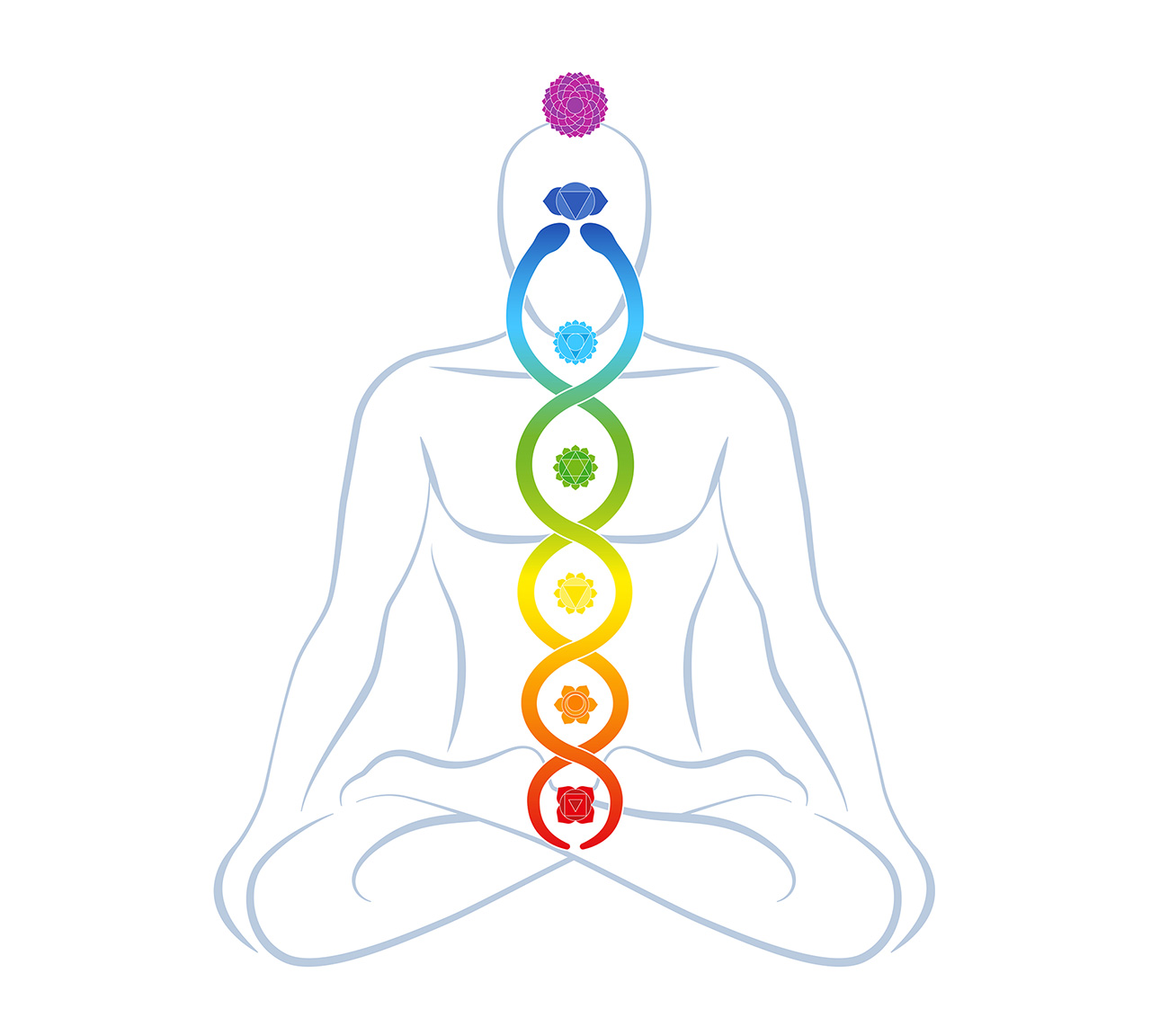
What Is the Ida and Pingala?
The ida and pingala are like two separate intake pipes for vital energies. Their duality is often personified as Shakti (divine feminine) and Shiva (divine masculine) as well as the feminine and masculine polarities or qualities in nature. Based on our understanding of magnetism in the Law of One (49:4-5), the ida functions as the feminine, negative, lunar, south-pole current. Often associated with the left side of the body, it acts as the magnetic, receptive channel that pulls incoming material energy or intelligent energy up into our gross physical bodies.
The pingala is said to function as the masculine, positive, solar, north-pole current. Associated with the right side of the body, it acts as the electric, expressive channel that projects and radiates energy outward into manifestation. In this sense, perhaps the inward-drawing south-pole attraction of ida and the outward-broadcasting north-pole radiation of pingala spiral around the central channel sushumna, creating a fundamental dual-polarity circuit that governs both physical incarnation and spiritual awakening.
What Is the Sushumna?
The central channel is considered the attribute-less sushumna. Running parallel between the ida and pingala and originating at the base of the spine, the sushumna is considered the central space that remains dormant until activated. Some would consider it the path of neutrality, stillness, and equilibrium, where the two dualities of ida and pingala are harmonized and duality ends.
Ordinarily blocked, the sushumna is said to provide a direct upwards pathway for potent spiritual energy or kundalini energy, to ascend through the energy centers. Yes…the infamous kundalini. We consider kundalini to be a potent form of unified life force energy. It’s also considered the process by which the polarities (masculine and feminine) of the ida and pingala channels are unified. Once this happens, we can reach a different type of balance — an inner balance that never gets disturbed.
How does all of this relate to the heart energy center’s dualing spirals, as explained by the Law of One (73:17)? Could the heart energy center’s double spiraling nature directly reflect ida and pingala merging into sushumna to further catalyze kundalini? For example, the first heart energy center spiral could be where the duality of ida and pingala cross and unify so that the ascending unified kundalini can rise through the heart gateway. The second spiral could then take this integrated kundalini and project it outward through the nadis, contributing to what we consider to be our integrated, body-wide electromagnetic field or energy field (aura).
Think of it this way. Imagine the body as a standing lamp plugged into a wall outlet. The lamp’s pole would be considered the sushumna, while ida and pingala could be considered two spiraling wires wrapped around it — one carrying a cool, receptive charge and the other a warm, active charge. Kundalini could be the electrical power from the wall outlet. As this energy travels up the lamp’s pole, it illuminates a series of lightbulbs spaced along the lamp, which would represent the energy centers. The light illuminating the room would represent the energy field or aura.
FEATURE
IDA CHANNEL
PINGALA CHANNEL
Energy Type
Lunar
Solar
Charge
Negative / Magnetic / South Pole
Positive / Active / North Pole
Flow Direction
Left side (starts at base, ends in left nostril)
Right side (starts at base, ends in right nostril)
Metaphysical Role
Mental / Intuitive
Vital / Physical
Characteristics
Cooling, passive, feminine, creative, inward-drawing, sustaining, receptive
Warming, active, masculine, analytical, outward radiating, active, evolving