




What Are the Fundamental Energy Centers?
Last Updated June 24, 2026
7 Fundamental Energy Centers
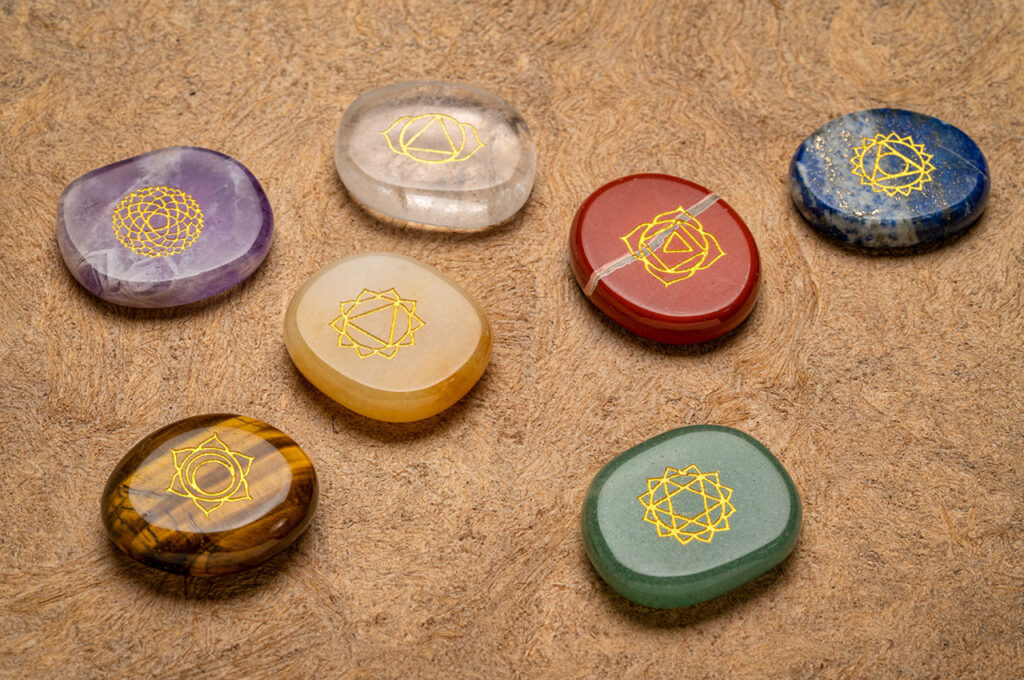
There doesn’t seem to be a consensus on the number or classification of energy centers (chakras). We’ve compiled a summary of the seven fundamental energy centers based on the seven schools of yoga and the Law of One’s description of energy centers (15:12, 51:8). The seven fundamental energy centers are the root, sacral, solar plexus, heart, throat, third-eye, and crown.
Each energy center is associated with an endocrine gland of the gross physical body, a consciousness level of awareness, color, energy field (aura) layer, and sound, as explained by Chloe Goodchild (CFP, Singer, and Educator). It’s thought that the intensity and clarity of a color can also indicate the strength of the energy or vibrational frequency associated with it. The energy centers associated with distinctly feminine and masculine principles are typically the sacral (feminine) and solar plexus (masculine) energy centers.
Dr Joe Dispenza (Author, Researcher & Lecturer) explains that the first three energy centers represent the human or lower self and support our primal functions for survival. Ergo, when only these energy centers are active, then we’re operating from a state of survival and limited consciousness. Now, here’s the kicker. When these centers are balanced, they support our procreation, security, and willpower. But, if these centers are imbalanced, then we move to a shadow side of survival, rendering the heart energy center virtually inactive. That’s because when we’re operating from the shadow side of survival, then love, trust, empathy, and vulnerability tend to take a back seat.
But, the more we move out of survival mode, the more we can activate the heart energy center which is the gateway to the upper energy centers. Once we activate the heart energy center, we can work on sustaining heart coherence, as Dr Joe Dispenza explains. This includes giving our heart loving attention which activates the release of oxytocin, generating feelings of love, joy, safety, and trust — the place from which we can manifest and attract our futures.
But, enough about that. Let’s dive into the energy centers!
Root (Muladhara, Red Ray)
The root energy center (muladhara) is said to be located at the base of the spine, near the genitals. It’s the foundation energy center (Law of One, 50:2), serving as the entry point for material energy. Some even suggest it serves as an entry point for life plan programming and samskaras, which govern our inner child. The root energy center is associated with the earth (prithvi) element and the color red, being similar to a spoked wheel or lotus flower in appearance. It’s also associated with the adrenals, spine, blood, reproductive organs, and apana regulation. This helps to remove toxins and refresh the earth prana we get from the food we eat.
The core theme of the root energy center is survival. Grounding and acceptance of the physical vehicle as a sacred tool can often help with balancing this center. Balanced attributes of the root energy center could include stability, security, and intuition (gift). Overactive attributes could include fear, anxiety, greed, and insecurity. Underactive attributes could include self-pity and co-dependency. Restlessness, fear of death, sexual obsession, unhealthy weight, fatigue, and constipation are said to be symptoms of a blockage.
The mantra associated with the root energy center is Lam (Langm). The Solfeggio frequency scale associates it with 396 Hz. Affirmations associated with the root energy center include, I feel safe and secure, I trust the universe to support me, and my inner child is healed. Yoga poses include Garland, Tree, Corpse, and Warrior II.
Sacral (Svadhishthana, Orange Ray)
The sacral energy center (svadhishthana) is often associated with the feminine principle and personal power (Law of One, 32:2). Located near the lower abdomen below the navel, the sacral energy center is associated with the water (jal) element and the color orange — being similar to a circular flower with petals in appearance. It’s also associated with the bladder, kidneys, and reproductive organs. Through vyana regulation it circulates water prana from the food we eat and liquids we drink to help us maintain water.
The core themes of the sacral energy center are personal identity and creation. Acceptance of ourselves and others as unique, valid expressions can often help with balancing this center. Balanced attributes of the sacral energy center could include creativity, sexuality, intimacy, self-worth, and clairsentience or clear feeling and sensing (gift).
Overactive attributes could include lacking boundaries, being overemotional, undisciplined, being attracted to drama, and moodiness. Underactive attributes could include being closed off, lacking self-esteem (Law of One, 15:12), and being unemotional. Power struggles in 1-on-1 relationships, feeling superior/inferior to others, stiffness, urinary issues, and infertility are said to be symptoms of a blockage.
The mantra associated with the sacral energy center is Vam. The Solfeggio frequency scale associates it with 417 Hz. Affirmations associated with the sacral energy center include, I embrace change as a healthy part of life, and I have boundaries that protect me. Yoga poses include Crow, Standing Forward-Bend, and Triangle.
Solar Plexus (Manipura, Yellow Ray)
The solar plexus energy center (manipura) is often associated with the masculine principle, self-awareness, and interaction (Law of One, 41:25). Located between the navel and bottom of the rib cage, the solar plexus energy center is associated with the fire (agani) element and the color yellow, being similar to a star in appearance. It’s also associated with the central nervous system, digestive system, metabolic system, pancreas, liver, gall bladder, and stomach. Through samana regulation it spreads fire prana (heat from sunlight and foods that absorb sunlight) to aid digestion and metabolism.
The core theme of the solar plexus energy center is personal power. Integrating the ego into the collective without losing or forcing the self can often help with balancing this center. Balanced attributes of the solar plexus energy center could include self-motivation, discipline, will-power, self-worth, purpose, resilience, and sensitivity to vibrations (gift).
Overactive attributes could include aggression, anger, and perfectionism. Underactive attributes could include indecisiveness, passiveness, lack of self-discipline, and lack of boundaries. Urinary problems, nerve pain, ulcers, gas, nausea, eating disorders, and asthma are said to be symptoms of a blockage. Blockages can also manifest as distortions of power and manipulation, according to the Law of One (15:12).
The mantra associated with the solar plexus energy center is Ram (Rangm). The Solfeggio frequency scale associates it with 528 Hz. Affirmations include, I feel calm, confident, and powerful, the only thing to control is how I respond to situations, and I can create positive change. Yoga poses include Boat, Bow, and Cobra.
Heart (Anahata, Green Ray)
The heart energy center (anahata) is thought to be located near the heart. It’s associated with the air (vayu) element and the color green, being similar to a lotus flower with triangles. The heart energy center is also associated with the heart, lungs, and thymus. Through prana regulation it stores and distributes air prana throughout the body, aiding the immune and circulatory systems. The heart energy center is also said to be the bridge between the lower and higher energy centers, most often associated with compassion and all-forgiving love, according to the Law of One (41:25).
The core theme of the heart energy center is universal love. Learning unconditional compassion can often help with balancing this center. Balanced attributes of the heart energy center could include love, compassion, empathy, trust, optimism, healthy boundaries, healing (gift), and telepathy (gift).
Overactive attributes could include unhealthy attachments, overly helpfulness stemming from unworthiness (Law of One, 12:31), clinginess, and lacking healthy boundaries. Underactive attributes include coldness, being distant, lacking compassion (Law of One, 15:12), loneliness, and being grudgeful. Conditional love, judgment, inability to forgive, heart and circulatory problems (high blood pressure, heart palpitations, heart attacks), poor circulation, asthma or other respiratory ailments, breast cancer, and stiff joints could be symptoms of a blockage.
The mantra associated with the heart energy center is Yam. The Solfeggio frequency scale associates it with 639 Hz. Affirmations include, I am open to giving and receiving love, I forgive myself, and I love all entities equally. Yoga poses and breathwork include Camel, Cobra, Fish, Half-Bridge, and Anulom Vilom.
Throat (Vishuddha, Blue Ray)
The throat energy center (vishuddha) is said to be located near the base of the throat, at the center of the larynx. The throat energy center is associated with the ether (akasha) element and the color blue, being multi-faceted with flashing brilliance. It’s also associated with the thyroid, shoulders, ears, parathyroid, larynx, and tongue. The throat energy center maintains the ether element by giving form to thoughts. It also facilitates clear expression, free communication with the self and other selves (Law of One, 48:7), and optimal metabolism.
The core theme of the throat energy center is communication. Clear, honest expression, and the ability to receive truth from others can often help with balancing this energy center. Balanced attributes of the throat energy center could include healthy expression/communication, integrity, authenticity, inspiration, and clairaudience or clear hearing (gift).
Overactive attributes could include being overly talkative, unable to listen, highly critical, and condescending. Underactive attributes include being introverted and the inability to communicate (Law of One, 15:12). Dishonesty, talking without listening, stiffness in the neck or shoulders, sore throat, laryngitis, earaches, dental issues or TMJ, and thyroid issues could be symptoms of a blockage.
The mantra associated with the throat energy center is Ham (Hangm). The Solfeggio frequency scale associates it with 741 Hz. Affirmations include I communicate confidently and with ease, and I am an active listener. Yoga poses and breathwork include Cobra, Plough, Shoulderstand, and Ujjayi Pranayama.
Third Eye (Ajna, Indigo Ray)
The third eye energy center (ajna) is thought to be located between the eyebrows. Being triangular and flower shaped in appearance, the third eye energy center is associated with divine light and the color indigo. It’s also associated with the hypothalamus, pituitary gland, pineal gland, eyes, base of the skull, and biorhythms. The third eye energy center is considered a gateway to intelligent infinity (Law of One, 39:10) and control center for perceiving, focusing, and directing divine light (pure consciousness). It is the ray of the adept (Law of One, 74:8), allowing us to perceive timelines and realities that lie beyond the 5 senses.
The third eye energy center also allows us to connect with our higher selves and causal body (the blueprint for the soul). It is said to function as a focal lens and filter. It ensures that only as much love/light as the entity can handle enters the energy system, while simultaneously focusing the previously scattered light/love of the lower energy centers into a single point. In Yogic practice, it’s also the point of concentration used to direct/will the flow of life force energy and rising kundalini energy upwards.
According to the Law of One (32:14), the indigo ray can only be opened (activated) through practice and considerable discipline, largely through self-acceptance. When activated, it helps the mind withdraw from sensory distractions and focus consciousness inward. As consciousness becomes more crystalline (stabilized), more work can be done (Law of One, 74:11).
Balanced attributes of the third eye energy center could include intuition, perception, clarity, spiritual insight, and clairvoyance or clear seeing (gift). Overactive attributes could include being out of touch with reality, lacking good judgment, being unable to focus, and being prone to hallucinations. Underactive attributes could include rigid thinking, reliance on authority, being distrustful of our inner voice, unworthiness (Law of One, 15:12), anxiety, and clinging to the past. Lack of focus, doubt in the divine, vision problems, migraines, sleep disorders, ear-related issues, seizures, and nightmares could be symptoms of a blockage.
The mantra associated with the third eye energy center is Om (Ongm). The Solfeggio frequency scale associates it with 852 Hz. Affirmations include, I am connected to universal consciousness and divine intelligence, and I am aligned with my higher self and inner truth. Yoga poses include Tree and Headstand.
Crown (Sahasrara, Violet White Ray)
The crown energy center (sahasrara) is said to be located above the crown of the head, beyond our gross physical bodies. It’s associated with the element of divine light (pure consciousness, intelligent infinity) and the color violet white. Being a thousand-petalled flower in appearance, it’s also associated with the endocrine system, which includes the hypothalamus, pituitary gland, and pineal gland in the brain.
The crown energy center is considered the center of spirituality, connecting us directly to intelligent infinity and pure consciousness. It’s the culminating point of the entire energy center system. The crown energy center is said to integrate the energy from the lower energy centers and all aspects of the soul into a unified, transcendent whole — representing the vibratory signature and vibrational thermometer of an entity (Law of One, 54:30). It also said to receive the highest frequency of divine light which is processed and translated into spiritual energy (para prakriti, intelligent energy) by the third eye energy center.
The crown energy center represents the potential for purity, clarity, wisdom, inner peace, spiritual liberation, and enlightenment.
The mantra associated with the crown energy center is Aum (Aumn). The Solfeggion frequency scale associates it with 963 Hz. Affirmations include, I am a divine soul, information I need comes to me, and I am guided by inner wisdom. Yoga poses include Corpse, Cow Face, and Headstand.