



Is There An Illusion of Separation?
The Veil of Amnesia and Maya
Veil of Amnesia or Forgetting
Is Source hiding its divinity and blessings like the roots of a tree are hidden unless we dig them up? Swami Mukundananda (Bhakti Yog Saint & Yoga Teacher) offers insight into this, explaining that love is only possible when there’s a choice. Ergo, perhaps Source deliberately hides from direct perception using its spiritual energy to provide us with the freedom to choose between love and fear (Bhagavad Gita, 9:2). This could explain why a veil of forgetting (Law of One, 21:9) or veil of amnesia (Bhagavad Gita, 7:25) is present for us, and why we forget our unified divinity.
Gnostic teachings suggest that the veil originated as a result of a choice made by the divine entity Sophia (The Apocryphon of John). Sophia, through free will and desire, gave birth to Yaltabaoth (the Demiurgos, Satan) without the consent of the Father and her male counterpart. After realizing the consequences of her desire, she casted Yaltabaoth from the spiritual universe to restore harmony but, in doing so, veiled him in ignorance.
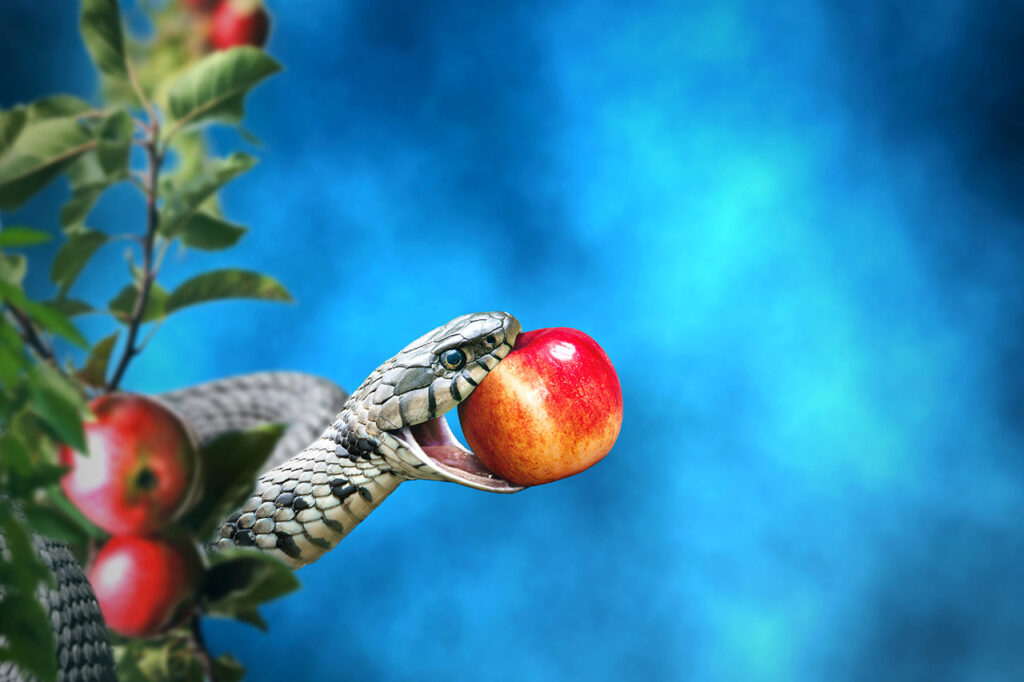
Yaltabaoth possesses the divine spark from Sophia but also ignorance of his true nature and separation from the spiritual universe (veil). It’s through this duality that he created and rules over the material universe. His ignorance is fostered in humanity through the influence of his archons (minions), who are said to be the ones who tempted Adam and Eve in the garden of Eden. But once Adam and Eve ate from the tree of knowledge of good and evil in The Bible (Genesis, 2:16), they were awakened to the true nature of their reality — as they identified with their bodies and knew they were naked.
So while some would say the heart of Sophia’s story is about mistakes, ignorance, and evil, perhaps it is that there is a divine spark of remembrance within all of us, waiting to be awakened when we’re veiled from the truth.
Maya & Prakriti
Does the veil of amnesia relate to the triad of creation from the Bhagavad Gita: maya, prakriti, and the three gunas of material nature? Consider this fellow souls. Maya (Bhagavad Gita, 7:13-14) is considered the cosmic illusion that veils Source. Keep in mind that when we refer to an illusion, it doesn’t mean that the material universe doesn’t exist at all. It simply means that the material universe is not what it appears to be. We have confused the reflection with the source.
Maya generally has two distinctions. Mahamaya keeps unliberated souls in ignorance and veils us from recognizing our true selves. It’s the principle of relativity, inversion, and polarity, representing the dualistic experiences and compulsions we’re subjected to in the material universe, according to Autobiography of a Yogi (16-150). Perhaps it’s related to our DMN (default mode network) which is associated with self-referential thought and mind wandering. Yogmaya, on the other hand, veils the magnificence of Source so that souls can form a more personal relationship with Source.
Consider this fellow souls. What if maya is synonymous with Yaltabaoth in Gnostic traditions and the concept of Satan in The Bible (Mark: 1:13, 8:33)? Things brings us to prakriti.
Prakriti represents all of Source’s creative energy — ranging from spiritual energy (para prakriti, souls) to material energy (apara prakriti, matter). The three gunas are considered the modes of operation for material energy: sattva (goodness), rajas (passion), and tamas (ignorance). They are the mechanism through which the illusion of mahamaya is created and sustained, binding the soul to the perishable material body (Bhagavad Gita, 14:5). In short, the three gunas are the threads that weave the material universe together while mahamaya is the cosmic illusion and power that orchestrates the weaving.
Maya As the Ultimate Catalyst
Because the illusion of mahamaya veils the absolute truth, this makes it easier for us to create attachments to matter. This can cause us to stray further from Source. Our research suggests that straying from Source binds us to an endless samsara cycle of life and death in the material universe. Could straying from Source or missing the mark of perfection be what The Bible explains as sinning or coming short of Source’s glory (Romans 3:23)?
But, fear not fellow souls. The Law of One (78:24) explains that the purpose of polarity (e.g. good and evil) is to develop the potential to do work. Ergo, maya and the veil of amnesia can serve as the ultimate catalysts, helping us to turn inwards toward Source. Essentially, the illusion of mahamaya is sustained by our attachment to the three gunas. Because the gunas act as aspects within our mind to shape our perspectives, they bind us to the material universe. This means that, while difficult, we can overcome their influence. Source is the perfect example of this.
Think about that for a second. Even though the material universe is an indirect manifestation of Source, Source isn’t tainted by the situations or behaviors of the material universe. Source is able to be in the world but not of the world (The Bible: John: 17:14-15). This is a characteristic that the soul is said to share because the soul is also not affected by the attributes of the body (Bhagavad Gita: 13:33). As above, so below; as below, so above (The Kybalion: C2:28, C8).
The Seven Principles
Aspects of Matter
According to The Seven Rays, the three gunas (sattva, rajas, and tamas) are translated as natural law, natural energy, and matter (C6:21). They’re often considered the fundamental tendencies, qualities, or modes of Source’s material energy (apara prakriti). Specifically, they are associated with the creator referred to as Lord Brahma (masculine nature), his companion Saraswati (feminine nature), and matter/existence (sat). All living entities are thought to possess all three gunas in varying degrees. But one guna tends to dominate our personality, nature, or environment at any given time.
Sattva or natural law/rhythm is said to be purer than the others. It creates attachments through our desire for happiness, goodness, stability, and knowledge. Rajas or natural energy/force conditions us toward passion, fruitive actions, and competitiveness. This can result in greed and suffering if not properly balanced. Tamas or matter/inertia clouds wisdom and binds us to ignorance, stagnation, and laziness. In this sense, the gunas are not just qualities. They’re considered the actual threads of material nature, meaning the entirety of material creation is a result of their interaction and, more importantly, imbalance. Before creation, they’re thought to reside in perfect harmony within unmanifested prakriti.
Aspects of Consciousness
Just as the three gunas are aspects of matter/existence (sat) and are associated with Lord Brahma, The Seven Rays (C2:6-7) explain there are three corresponding aspects of consciousness (chit) that are associated with the sustainer referred to as Lord Vishnu (masculine nature) and his companion Lakshmi (feminine nature). The aspects of consciousness are will (ichchha), love or wisdom (jnana), and thought or activity (kriya). Will (ichchha) is our awareness of self, acting through willpower or free will. Love or wisdom (jnana) is our awareness of others, acting through love. Thought or activity (kriya) is our awareness of things and intelligence, acting through thought.
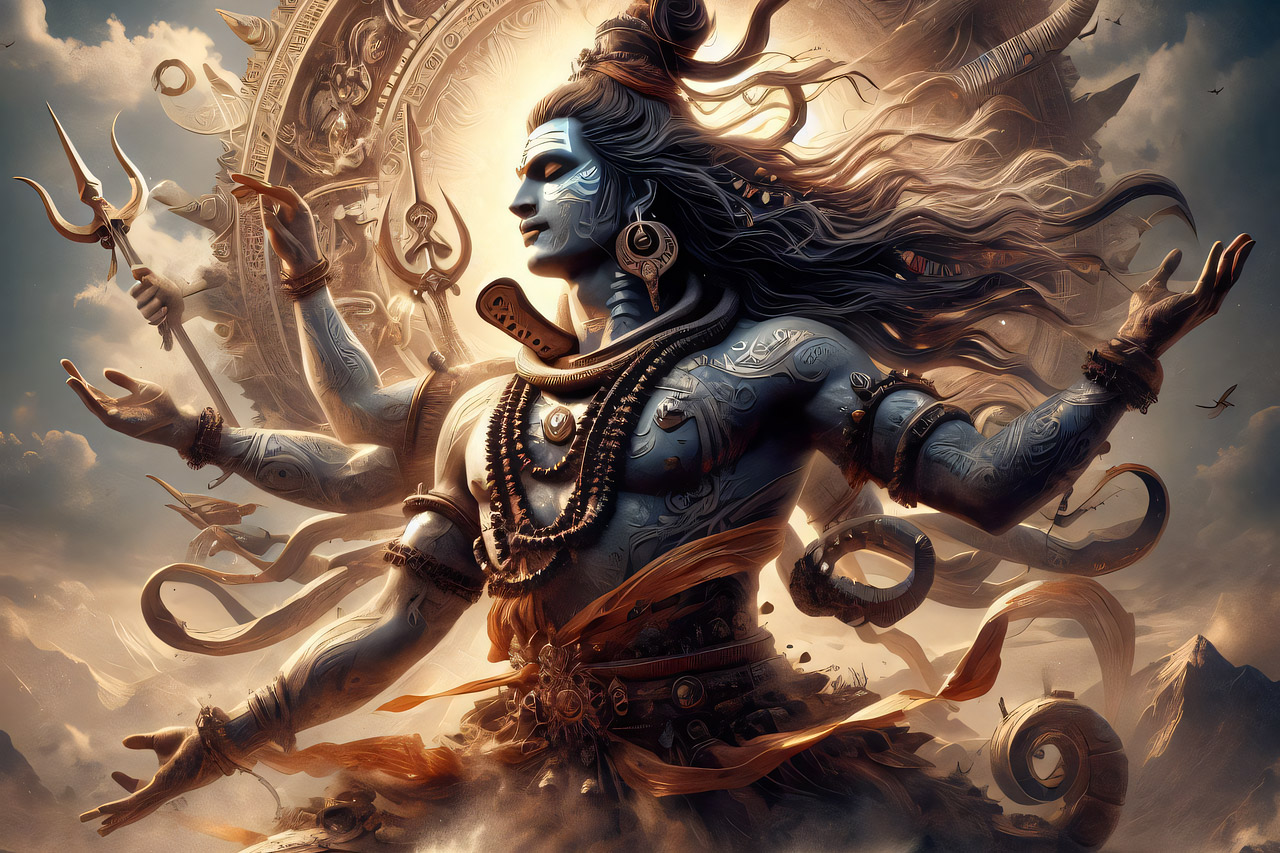
Could the relationship between chit and sat (e.g. consciousness and matter) define our experiences in the material universe? The Seven Rays (C8:29) suggest that maya is the principle that comes into play from the confusing interplay of chit and sat, hiding chit’s (consciousness) true nature and projecting the world of sat (matter). Lord Shiva and his companion Shakti/Parvati are considered the masculine and feminine natures associated with destroying the illusion of maya. They reveal the true reality and end cycles to return things to their pure state.
Because the soul is inherently sat-chit-ananda (eternal, knowledgeable, and bliss), it’s said that the ultimate goal for a soul is to transcend the illusion of maya — to see clearly through the illusion. This allows chit (consciousness) to recognize its true identity, which is independent of sat (matter/existence), and to realize its inherent state of ananda (bliss). Together, natural law, natural energy, matter, will, love (wisdom), thought (activity), and maya represent the 7 principles of material existence, according to The Seven Rays.