




What Are the Five Koshas?
Five Koshas of Illusion
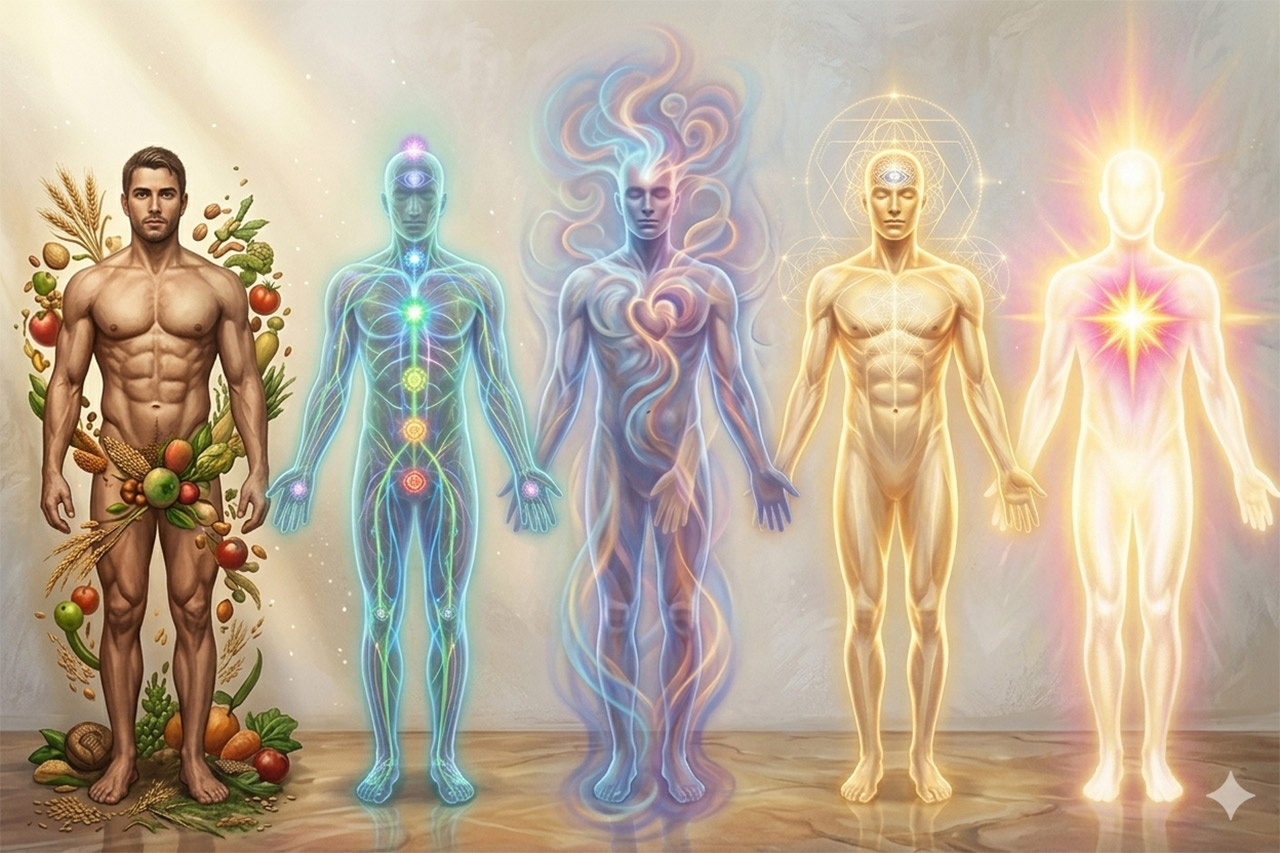
Yogic and Vedanta teachings reference five koshas (sheaths) that cover the unliberated soul (Bhagavad Gita, 13:6). These koshas are considered interconnected manifestations of maya, covering the soul in an illusion to obscure its true nature. The five koshas are said to originate from the Vedas (Upanishads), being refined in the Advaita Vendanta. They are anna (gross), prana (energy/vital air), mano (mental), vijnana (intellect), and ananda (bliss). Each name is followed by maya and kosha. Kosha means sheath or covering and maya refers to illusion — meaning our material bodies (gross physical, subtle astral, and causal) are temporarily defined by these coverings.
Think of it this way. The koshas organize material experience into three distinct containers. Each container is influenced by the three gunas and represents a different physical, emotional, mental, and spiritual layer of our being. The gross physical body is said to consist solely of the annamaya kosha (food sheath) — our tangible biological hardware. The subtle astral body serves as our sophisticated software, powered by the pranamaya (vital energy), manomaya (instinctive mind), and vijnanamaya (intellectual discernment) koshas — together they govern our emotions and personality. Finally, the causal body consists of the anandamaya kosha (bliss sheath), acting as the refined spiritual seed that stores the soul’s blueprint and purest potential.
As each sheath becomes further from Source, the divine light of Source is less able to penetrate these veils of separation. Kamini Desai, Ph.D. explains that the koshas map the process of embodiment from unmanifested, undifferentiated potential (the ocean) into the gross physical body (the wave). Essentially, they reinforce the idea that we are not separate from the whole, much like a wave isn’t separate from the ocean.
Five Koshas Explained
Annamaya (Gross)
The annamaya kosha is the most dense and tangible kosha (layer). As the furthest from Source, it’s considered the first layer covering the soul and is regarded as the gross physical body itself. It’s also associated with basic survival needs — like food, water, and shelter — along with stability, structure, and sensations. Through this covering, we’re thought to identify ourselves as matter which includes skin, bones, muscles, organs, and tissues. It represents the body of our waking state, meaning we experience and interact with gross physical planes through this covering.
Pranamaya (Energy/Vital Air)
The pranamaya kosha is the vital energy or life-airs kosha (layer) of the subtle astral body. As an interface between the annamaya kosha (gross) and manomaya kosha (mental), it’s regulated by the 5 subtle prana directions — prana, apana, vyana, samana, and udana. It also serves as the mechanism by which prana (life force energy) enters the body via our energy centers (chakras). The pranamaya kosha is said to speak through bodily and physical sensations, like gut feelings and impulses. It governs our vital functions (breathing, digestion, metabolism, and circulation) and our energy systems to maintain homeostasis and heal the gross physical body.
Manomaya (Mental)
The manomaya kosha is the mental and emotional kosha (layer) of the subtle astral body. It’s considered the outer, instinctive, conscious mind responsible for our working senses (voice, hands, legs, genitals, and anus), cognitive functions (memory, sensory perception, and reasoning), emotions, thoughts, beliefs, ego, and imagination. It allows us to receive sensory impressions and data from the outside environment. This information is passed along to the vijnanamaya kosha (intellectual) for interpretation. The result is our choices, responses, and actions.
Vijnanamaya (Intellectual)
The vijnanamaya kosha is considered the knowledge kosha (layer) of the subtle astral body. Acting as a vehicle for consciousness, it’s associated with our knowledge senses (ears, eyes, tongue, skin, and nose), discerning intellect (buddhi), cognition, judgment, willpower, wisdom, and intuition. It’s said to extract meaning from incoming sensory impressions from the manomaya kosha (mental), helping us to make choices based on wisdom and the true reality or material attachments if hijacked by the ego. From this, our choices are passed on to the body to be carried out as actions.
It’s through the vijnanamaya kosha that we’re said to perceive the divine light of the soul – which is often described as a reflection of the anandamaya (bliss) kosha. Unclouded, it acts as our inner guidance system – connecting us with our higher selves (superconscious mind) and enabling us to perceive and contemplate with pristine clarity. When clouded it means we’re not seeing reality as it truly is but filtering it through our samskaras (karmic seeds and impressions carried over from past lives), past memories, attachments, tendencies, and beliefs.
Anandamaya (Bliss)
The anandamaya kosha is considered the subtlest, thinnest, and most refined kosha — the thinnest veil standing between ordinary awareness and Source level awareness. As the only kosha of the casual body, it’s considered the gateway to formless Source (pure consciousness, Brahman). It enables us to experience the purest state of bliss, peace, and joy while embodied in the material universe.
When unclouded, we experience the truest reflection of formless Source possible while still having a sense of individuality. When clouded, the anandamaya kosha is said to operate through association with our consciousness, acting as the blueprint and hard drive for the soul to store samskaras, memories, emotions, habits, attachments, and residual imprints.
Regardless of there function, the ultimate goal seems to be to shed these koshas or coverings or make them so transparent that the divine light of Brahman can clearly shine through and our spiritual light can clearly radiate out. So we’re setting the intention to do just that.
Happy shedding fellow souls!